

Why Our First Aid Training Stands Out for Confidence, Skills and Real-Life Readiness
A first aid certificate is useful. The real value comes when a person can stay calm, act quickly and use the right skill at the right time.
That is what separates a tick-box training day from a course that people remember when something goes wrong. First aid is practical by nature. It deals with real people, real pressure and moments where clear action matters. A good course should do more than explain what to do. It should help learners practise, ask questions, make mistakes safely and leave with the belief that they can respond.
At SWBM Academy, our first aid training is built around that kind of readiness. The course information and learner reviews on our first aid page give a clear picture of what to expect, but this post goes further into the thinking behind the training: why confidence matters, how practical skills are taught, and what makes the learning feel relevant beyond the classroom.
This article is for general information only. First aid advice should always be learned through approved training and kept up to date with current guidance.

Confidence is taught through practice, not pressure
Many people worry that they will freeze in an emergency. That fear is normal. First aid situations often involve shock, noise, emotion and uncertainty. Even people who have read guidance before can feel unsure when they need to act.
A strong first aid course tackles that directly. It gives learners repeated chances to practise in a calm setting, so the actions feel less unfamiliar later.
Confidence grows when learners can:
See a skill demonstrated clearly
Try it for themselves
Receive helpful correction
Repeat the skill until it feels more natural
Ask questions without feeling judged
This matters because first aid is not only a set of steps. It is also a mindset. Learners need to know how to assess a scene, call for help, support the casualty and look after their own safety.
Good training does not pretend emergencies are easy. It prepares people for the fact that they may feel nervous, then shows them how to act anyway.
That is one reason practical teaching is so valuable. When a learner has already placed their hands correctly during CPR practice, used training equipment, or talked through what they would do in a scenario, they are not starting from zero if something happens in real life.
First Aid Training in London | Confidence & Real-Life Skills | Real-life readiness starts with realistic scenarios | SWBM Academy
First aid training works best when it reflects the kinds of situations people may actually face. A course should not feel like a list of definitions to memorise. It should connect each topic to everyday settings where help may be needed.
That could include:
A person becoming unresponsive
Someone choking during a meal
A burn in a kitchen or workshop
A fall in a public place
A cut that needs bleeding control
A seizure or sudden illness
An incident at work where calm action is needed
The value is not only in knowing individual treatments. It is in learning how to think through the situation in order.
Is the area safe? Is the person responsive? Is emergency help needed? What can be done while waiting for support?
These simple questions help learners slow the moment down. They also reduce guesswork. In a stressful situation, a clear process can stop panic from taking over.
Our first aid course is designed to help learners build that process. The aim is for people to leave with practical knowledge they can picture using, not just notes they may never look at again.

Practical skills make the learning stick
People remember more when they do something, not just when they hear it explained. That is especially true for first aid.
Practical skills build muscle memory. Learners can feel the position of their hands, understand the pace of a response and notice small details that are hard to learn from a slide or handbook alone.
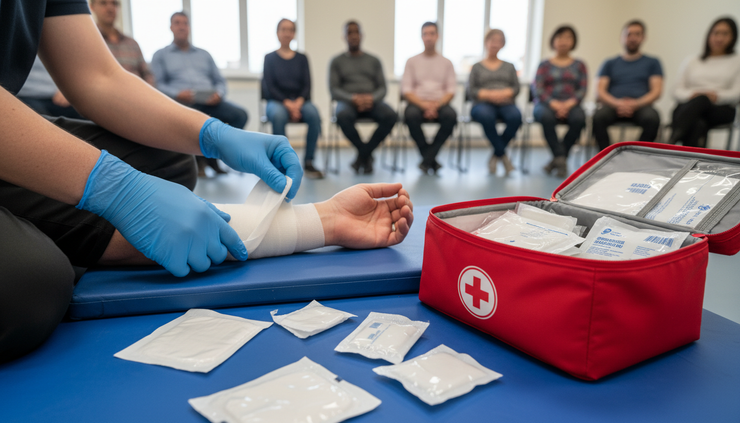
A practical first aid session may involve learning and practising skills such as:
Checking responsiveness
Opening an airway
Placing someone in the recovery position
Carrying out CPR on a manikin
Using an AED training device where appropriate
Managing bleeding with dressings and pressure
Responding to choking
Supporting someone with burns, shock or sudden illness
The point is not to rush through a long list. The point is to make each skill clear and usable.
A learner might understand CPR in theory, but practice helps answer the real questions. Where exactly do hands go? How firm should compressions feel on a manikin? What does it feel like to keep going? How should someone call for help while another person starts CPR?
These details matter. They turn abstract knowledge into action.
A good trainer also spots hesitation. If someone feels unsure, the trainer can explain the step again, demonstrate a better technique, or give the learner another try. That kind of feedback is hard to replace.
The best training feels supportive, not intimidating
First aid can be a serious subject. That does not mean the learning environment should feel tense.
People learn better when they feel comfortable enough to take part. A supportive course gives learners room to ask simple questions, practise at their own pace and admit when they are unsure.
That tone matters because learners often arrive with different levels of experience. Some may have completed training before. Others may be completely new to first aid. Some may feel confident in group settings. Others may be anxious about being watched.
The job of the trainer is to bring everyone along.
A strong learning environment includes:
Clear explanations without unnecessary jargon
Demonstrations that are easy to follow
Practical tasks broken into manageable steps
Encouragement without rushing
Correction that helps rather than embarrasses
Time for questions and clarification
This approach improves the whole course. Learners are more likely to speak up when they do not understand something. They are also more likely to practise properly rather than pretend they are fine.
Reviews can help show this side of a course. Course descriptions tell you what is covered. Learner feedback often reveals how the training felt. On our first aid page, the reviews sit alongside the course details so people can get a fuller view of the experience before booking.
First aid training is useful far beyond the workplace
Many people book first aid because they need it for work. That is a valid reason. Workplaces need trained people who can respond to injuries and medical incidents. In many settings, first aid training also forms part of wider health and safety planning.
Yet the value does not stop at work.
The same skills can help at home, while travelling, at sports clubs, in community spaces, or around family and friends. First aid knowledge follows the learner everywhere.
A parent may use it when a child is choking. A coach may need it after a fall. A colleague may need it when someone feels faint. A passer-by may use it while waiting for an ambulance.
That wider usefulness is one reason people often find first aid training rewarding. It gives them something practical they can carry into daily life.
It also changes how people notice risk. Trained learners often become better at spotting hazards, thinking ahead and responding calmly to smaller incidents before they become more serious.
Clear structure helps learners stay calm later
In an emergency, people rarely have time to think through every detail slowly. That is why structure matters.
A well-taught first aid course gives learners simple patterns they can remember under pressure. These patterns do not replace judgement, but they provide a starting point.
For example, learners may be taught to:
Check for danger before approaching
Assess the casualty’s response
Call for help or ask someone else to call
Support breathing and circulation where needed
Give suitable first aid until professional help arrives
Reassure the casualty and monitor changes
This kind of order reduces panic. It also helps learners avoid rushing into treatment before checking basic safety.
Clear structure also supports teamwork. In many real incidents, more than one person may be present. Training helps people understand how to communicate, delegate and keep the situation organised.
Simple phrases can help:
“You call 999 now.”
“You bring the first aid kit.”
“I’m going to stay with them.”
“Tell me if their breathing changes.”
These are small details, but they make a real difference. Emergencies often feel chaotic. Calm communication can create a sense of control.
Reviews matter because they show the learner experience
A course page can explain the content, length and booking details. Reviews add another layer. They show how people felt once they had completed the training.
When reading first aid course reviews, look for comments that mention:
The clarity of the trainer
How practical the session felt
Whether learners felt more confident afterwards
The quality of explanations
The pace of the course
How well questions were answered
Whether the training felt relevant to real situations
These points reveal the true quality of a course. A learner should not leave feeling overloaded, confused or unsure how the training applies outside the room.
Feedback is especially useful for first aid because confidence is such a big part of the outcome. People rarely judge a course only by what was covered. They judge it by whether they feel able to use what they learned.
That is why the reviews on our first aid page are worth reading alongside the course description. They offer a practical sense of the training from people who have experienced it.
What makes our course stand out
The strength of our first aid training comes from how the pieces work together. Confidence, skills and real-life readiness are connected. Miss one, and the training feels incomplete.
A learner who knows the theory but has not practised may lack confidence. A learner who practises without clear explanation may not understand when to use a skill. A learner who can pass an assessment but cannot picture a real incident may struggle when pressure rises.
Our approach brings those parts together through clear teaching, practical tasks and a supportive learning environment.
Confidence
Skills
Readiness
Learners get the chance to practise, ask questions and build belief in their ability to respond.
Core first aid actions are demonstrated, practised and corrected so they become easier to remember.
Training links the skills to real situations, helping learners understand what to do when it matters.
This is the kind of training people tend to value after the course ends. The certificate is part of the outcome. The bigger result is knowing that, if something happens, they are better prepared to help.

A course that prepares people for the moments that matter
First aid training should be practical, clear and memorable. It should help people understand what to do, give them time to practise properly and build the confidence to respond when someone needs help.
That is what we aim to deliver through our course.
The best way to judge first aid training is to look beyond the certificate. Ask what learners practise. Ask how the session is taught. Ask whether the course helps people feel calm, capable and ready for real situations.
When those elements come together, first aid becomes more than a requirement. It becomes a skill people carry with them, ready for the moments when calm action can make all the difference.


Comments